AI Trends / SpaceX IPO x AI Knowledge Work

The Path the World's Richest Man Has Pointed Out for Knowledge Workers, With a Trillion Dollars.

On June 12, 2026, SpaceX went public and Elon Musk became the world's first trillionaire. This piece places his bet on "automated knowledge work" alongside work, judgment, and AI knowledge management on the same map.

Source: An IPO Called "the AI IPO"

SpaceX listed on Nasdaq on June 12, 2026 under the ticker SPCX, raising approximately $75 billion, the largest IPO in history. The factual events in this article are based on the prospectus and reporting from CNBC, Bloomberg, and other outlets. The video below is Business Today's live broadcast from listing day, used here as a first-hand reference.

SpaceX IPO Nasdaq listing live broadcast YouTube thumbnail
Event
SpaceX lists on Nasdaq, ticker SPCX
Video
LIVE: SpaceX Goes Public On Nasdaq, live broadcast
Source
Business Today
Date
2026-06-12
Length
approx. 37 min
Original
Business Today YouTube ↗
Prospectus
Space Exploration Technologies, Form S-1, FY2026
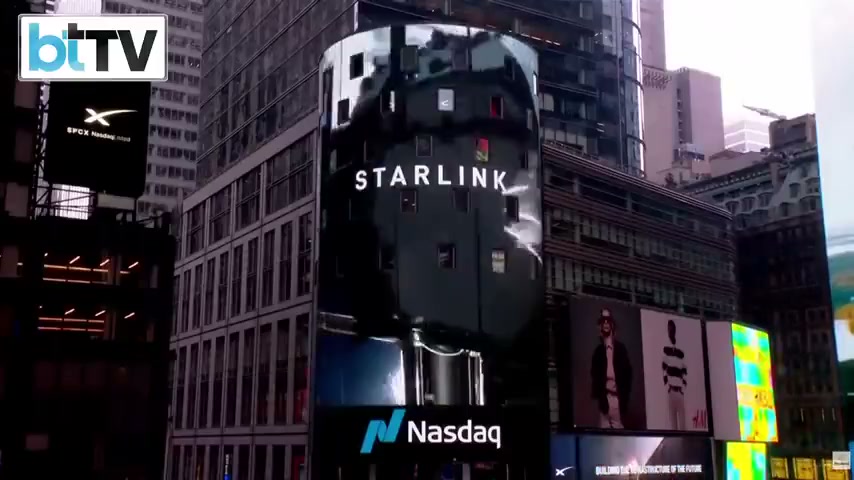
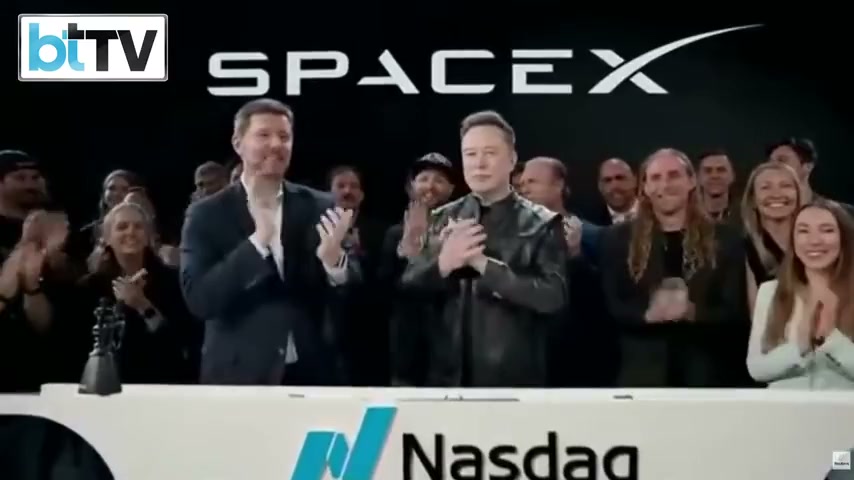
Elon Musk applauding at the Nasdaq listing event Times Square Nasdaq screen displaying SPCX listing Aerial dusk view of SpaceX factory

Footage source: Business Today live broadcast, listing day, 2026-06-12

The Facts: This Trillion Is a Bet on Automated Knowledge Work

Treating this only as a rocket company going public misses the bigger picture. SpaceX has absorbed xAI (Grok) and the social platform X. The market has called this listing "the AI IPO." The prospectus claims a total addressable market of approximately $28.5 trillion, with nearly 80% attributed to AI.

The Market Landscape Claimed in the Prospectus

TOTAL TAM · $28.5 TRILLION

$22.7 Trillion · Automated Knowledge Work
Remaining ~$5.8T

The full bar represents the $28.5 trillion total TAM claimed in the prospectus. The orange segment represents the $22.7 trillion opportunity defined as "automating knowledge work with AI agents," roughly 80% of the total TAM. This is the primary battleground the world's richest person is betting on.

01A New World's Richest Person

Musk's net worth reached approximately $1.05 trillion, making him the world's first trillionaire, roughly twice the combined wealth of Bezos and Arnault.

02Largest IPO in History

The offering raised approximately $75 billion, with a target listing valuation of around $1.75 trillion.

03This Is an AI IPO

In February 2026, SpaceX absorbed xAI (Grok) and the social platform X. Roughly 90% of its valuation now stems from AI.

04The Biggest Bet

$22.7 trillion in enterprise applications, defined in the prospectus as using AI agents to automate knowledge work, represents about 80% of the AI market opportunity.

05Macrohard

The platform the prospectus promotes. It allows autonomous agents to take over entire digital workflows, from writing code and product development to management and business processes.

06Musk's View on Work

He has said publicly that one day work will no longer be necessary. You can work if you want, for personal fulfillment, but AI will be able to do everything.

My Reading: As Execution Gets Automated, Judgment Becomes Your Asset

I've placed this event in the context of knowledge workers' situation and organized my reading into four theses.

Thesis 01

The Richest Person's Trillion Is a Bet That Execution Gets Cheaper

The largest item in the prospectus is automating knowledge work, and Musk has said work will eventually become optional. The signals are consistent: the ability to get things done is becoming something you can buy, something you can outsource to AI.

My reading: When the world's wealthiest person is betting that execution gets automated, placing your value in how fast or how much you can produce becomes an increasingly dangerous position.

Thesis 02

Before Work Becomes Optional, Ask What You've Been Accumulating

"Work won't be necessary someday" is a vision without a clear timeline. Before that day arrives, the market will reward those who know how to use AI while also accumulating judgment that belongs to them alone.

My reading: Rather than waiting for AI to finish your work, start using AI right now to build something no one can take from you.

Thesis 03

What AI Cannot Take Is Your Judgment

AI can help you finish reports and run processes, but it won't automatically know what the right decision is for you, for your clients, or for your field.

My reading: Judgment is the genuinely scarce resource in the age of AI. It's the perspective you develop after enough cases that takes others a long time to match.

Thesis 04

Judgment Fades Unless You Distill It

This judgment usually stays locked in your head. When you clock out, it goes dark. When you switch tools, you have to re-explain the context from scratch. You're making judgment calls every day, yet you've almost never preserved them.

My reading: Distill your judgment into a knowledge base that belongs to you, one that can be accumulated, searched, read by your AI, and acted upon.

His Claims, and How Different Voices Are Responding

Having shared my own reading, I'm also including Musk's and the prospectus's own claims, along with highlights from media coverage and commentary on both sides. I want you to have the full picture to draw your own conclusions. The following is organized from various media reports and commentaries. For the original events, the company's announcements and SEC filings remain the authoritative source.

Musk's and the Prospectus's Claims

  • SpaceX positions itself as a vertically integrated AI platform. Rockets are one component; AI is the primary arena.
  • Macrohard is designed to let autonomous agents fully simulate digital workflows, from coding and product development to management.
  • The largest market is enterprise applications: using AI agents to automate knowledge work, at $22.7 trillion.
  • The prospectus claims a total TAM of approximately $28.5 trillion, the largest addressable market in human history.
  • Musk's long-term vision is "work optional": eventually AI will be able to do everything.

Believers: Betting on Future Growth

  • WSJ: A wave of retail investors rallied behind Musk; SpaceX is one of the most landmark IPOs of 2026.
  • Axios: The roadshow and pricing process is seen as a template for future mega-IPOs like Anthropic and OpenAI.
  • Business Insider: Investors are buying future exponential growth, betting on long-term themes including Starlink, AI, and space infrastructure.
  • Senior executives framed their public narrative around milestones, mission, and long-term vision.

This preemptive playbook is likely to be replicated for Anthropic and OpenAI.Axios, 2026-06-12

Skeptics: Valuation and Concentration of Power

  • The Guardian, citing Morningstar: The valuation is highly speculative, with a clear disconnect between market expectations and fundamentals.
  • Critics argue this is more of a bet on Musk's personal control, with little accountability or checks and balances.
  • Pushback extends to wealth concentration and inequality, raising political concerns about democracy versus oligarchy.
  • Ordinary people may be passively exposed to SpaceX risk through retirement funds and index funds.

There's no accountability. No checks. No balances.The Guardian commentary, 2026-06-13

Sources: WSJ, Axios, Business Insider, The Guardian (2026-06-11 to 06-13). Different outlets use slightly different figures for valuation, opening/closing prices, and market cap; company announcements and SEC filings are the authoritative reference.
Applying This to AI Knowledge Management: Turning Judgment into Your Own Knowledge Base

For Knowledge Workers

  • Designate one consistent place to record your judgment. After each decision, spend three minutes writing down the situation, your reasoning, and why you chose that path.
  • Give it structure. Use tags and links to connect related judgment calls so you can find them later, and so your AI can read and act on them.
  • Write down how you make decisions as a standard. Let AI follow it, be checked against it, and be corrected by it.
  • Hand repetitive execution to AI. Reserve your focus for decisions only you can make.

For Organizations and Teams

  • Start by building a shared knowledge foundation. Otherwise every person is feeding AI a different version of reality.
  • Use small, well-scoped experiments with clear tasks, clear data, and clear acceptance criteria to reduce risk.
  • Write judgment standards and risk boundaries as living documents, not one-off announcements.
  • Training should go beyond operations. Teach problem framing, result validation, and accountability boundaries.

This article places net worth and valuation figures where reporting numbers belong, and puts prospectus language where company claims belong. For the original events, please refer back to the prospectus and individual media reports. The video is the live broadcast from listing day.Sources: CNBC, Bloomberg, The Guardian, WSJ, Axios, Business Insider, Decoding Discontinuity, Barchart, June 2026; Business Today YouTube live broadcast, 2026-06-12

He's automating execution. What you should be building is judgment.

Organize your knowledge, processes, decision standards, and risk boundaries into a knowledge base that belongs to you. The stronger AI gets, the more valuable you become, because it amplifies everything you've already accumulated.

Free Online Talks

Two free talks every month.

Join the LINE Community ↗