This article outlines the actual meeting format I use: the Double-Agents Meeting. It involves two people and their AI interacting with another pair of people and their AI, all together in one session. The text provides you with a five-step workflow to directly follow, along with PAAP, AAP, AA three-stage evolution judgments: when it's appropriate for humans to step out, and under what conditions pure AIs can take over.
- You're discussing complex projects with a client or partner, spending two to three hours in the first meeting just on data, terminology, and goals.
- You already have your own AI (Claude, Codex, ChatGPT can all be included), and you want it to move from "help me draft" into a formal collaboration process.
- You've heard of the idea of having your Agent talk with my Agent, which feels like a promising direction but also seems off somehow.
- A Two-Person Meeting Workflow for Virtual Horse Meetings in Just Five Steps.
- PAAP, AAP, AA Three-Stage Evolution Criteria: When Should Humans Gradually Withdraw?
- A Judgment Criterion: Which Tasks Should Agents Handle First, and Which Must Be Handled by Humans?
An Hour-and-a-Half Meeting Lasts for Three Hours; Most of the Time Is Spent Talking to Each Other.
When a Project is Complex, Verbal Communication Can Waste Too Much Time. My Experience Shows That Sometimes Meetings Can Last Two or Three Hours Before Goals Are Aligned.
Recall This Type of Meeting: How Much Time Was Spent Exchanging Background Information, Confirming Terms, and Listing What Each Person Has? These Tasks Are Important, But They Don't Involve Judgment.
So, some might think: Let the AI handle it instead. Your Agent directly communicates with my Agent, and humans wait for results.
Both extremes are not ideal.
The background data volume of complex projects requires hours to sync through conversation. Most of the time is spent on exchanging information that doesn't immediately lead to a judgment.
Directly switching Agents can lose too many details. Many feelings, motivations, and intuitive insights that are hard to articulate in the first place become even harder when compressed by Agents on both sides before being transmitted. (This point was also discussed by Naval Ravikant during his recent conversation, as seen below for verification.)
Duo-Meeting: Four Parties Involved
I bring my Agent, and you bring your Agent. We discuss together as four parties. The workflow consists of five steps:
- mutual climbing: First, I'll see how my Agent accesses your stuff, and you do the same for mine.
- Each team member produces their communication plan: Start by generating a preliminary communication table, which I will send to you.
- mutual review: We'll then review each other's drafts together.
- Converge into a shared table.: Ultimately, there will be one shared table.
- Human confirmation: At this step, the human enters the scene. For example, when my Agent says "The other party doesn't want to do this," I immediately ask, "Really?" The other party might say "Yes, yes, I already updated it," or "Yes, I just don't want to because of some reason." Three sentences clarify the Agent's potential misreadings.
It’s equivalent to first letting the Agent filter through all the data and find the truly important topics. Then, humans can discuss them. This avoids wasting time aligning the data.
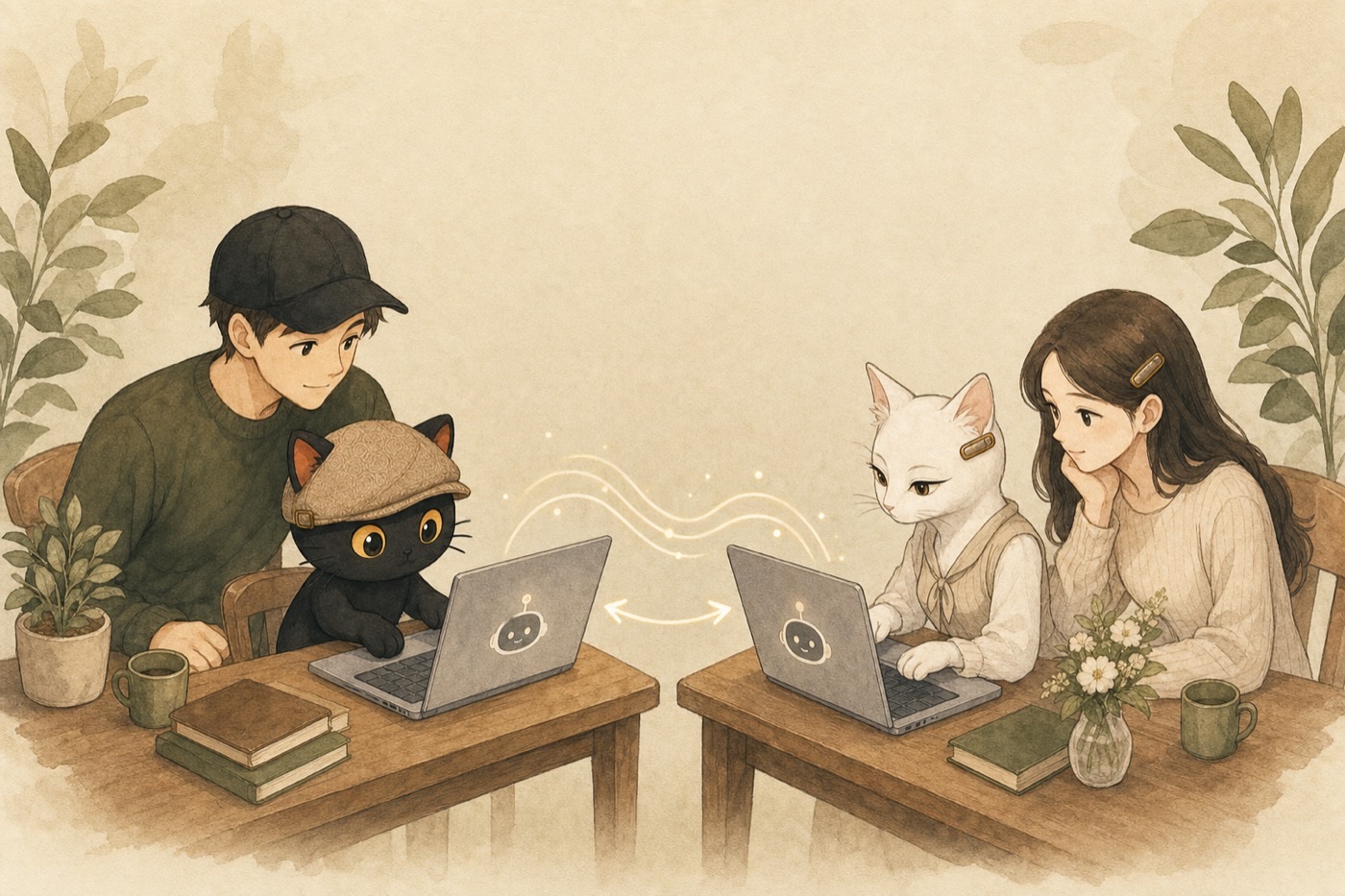
Why Is It Called the Two-Person Horse?
This name is borrowed from "two-person horse" in Go and chess: human plus AI playing together. On my side, it's a human plus AI playing against an opponent who is also a human plus AI. We're playing this game together. So I think we should call these types of meetings "Two-Person Horse Meetings," which are meetings where humans work alongside Agents.
Why Am I Using This Approach Now?
My viewpoint: Based on my experience handling complex collaborations, this is a very efficient approach at the moment. When Agents aren't as smart yet and our knowledge base isn't fully developed, having a human nearby to assist, guide, supplement, and make decisions is necessary.
(Revising and Supplementing) Our knowledge base is still in accumulation phase, so Agents might miss or misinterpret things. Having someone on-site can correct these issues with just one sentence.
Evolutionary Three Phases: PAAP, AAP, AA
P represents People (individuals or users), and A represents the Agent. The three stages involve progressively removing P.
Human plus Agent versus Human plus Agent, where all parties engage in conversation. This is the starting point. Especially for roles like a coach or knowledge educator, it's essential to personally intervene.
After my AI handles 90% of simple meetings and 100% of straightforward ones flawlessly, only complex decisions requiring human input remain. Experienced Agents guide new hires through their interactions with new Agent counterparts.
New hires mature enough, then A can handle everything. The prerequisite is that the knowledge base, workflow, and understanding of AI are all in place.
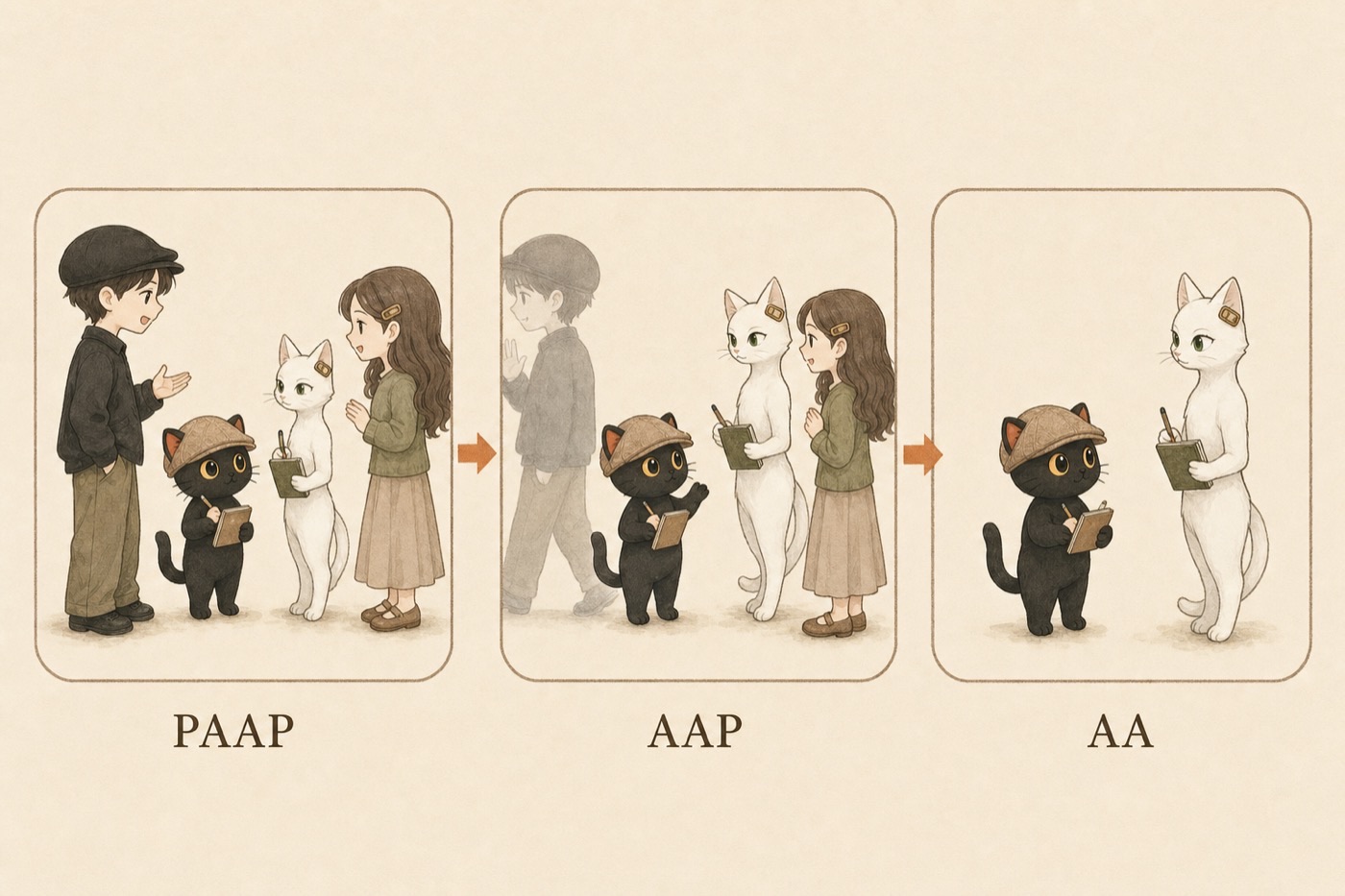
Take onboarding a new hire as an example: once I am confident that the recurring workplace questions have been prepared for and AI can handle them, I can step out of the routine exchange between myself, the new hire, and the new hire's AI.
Let's apply this judgment criterion.
Before the next complex meeting, divide the work into two piles:
- Exchange of Background Information and Alignment of Terms
- Review what each person has produced
- Create and communicate the output table, have each other review the drafts
- Decision, trust, and commitment (the same phrase mentioned in the video, I fully agree with)
- Handling unformed language information: the other party's hesitation, concerns not expressed verbally (meaning loss pointed out in the same segment of the video)
- Points that need to be confirmed in person but have been read out loud
Bring your Agent for the next complex meeting
"Let your Agent speak with my Agent" will come in the future, but it won't jump directly there. Start by having all parties open a discussion together, allowing Agents to filter data and focus on truly important matters; as they mature, people can gradually be removed.
Its performance depends on how complete your knowledge base is. Start by building your own knowledge assets.