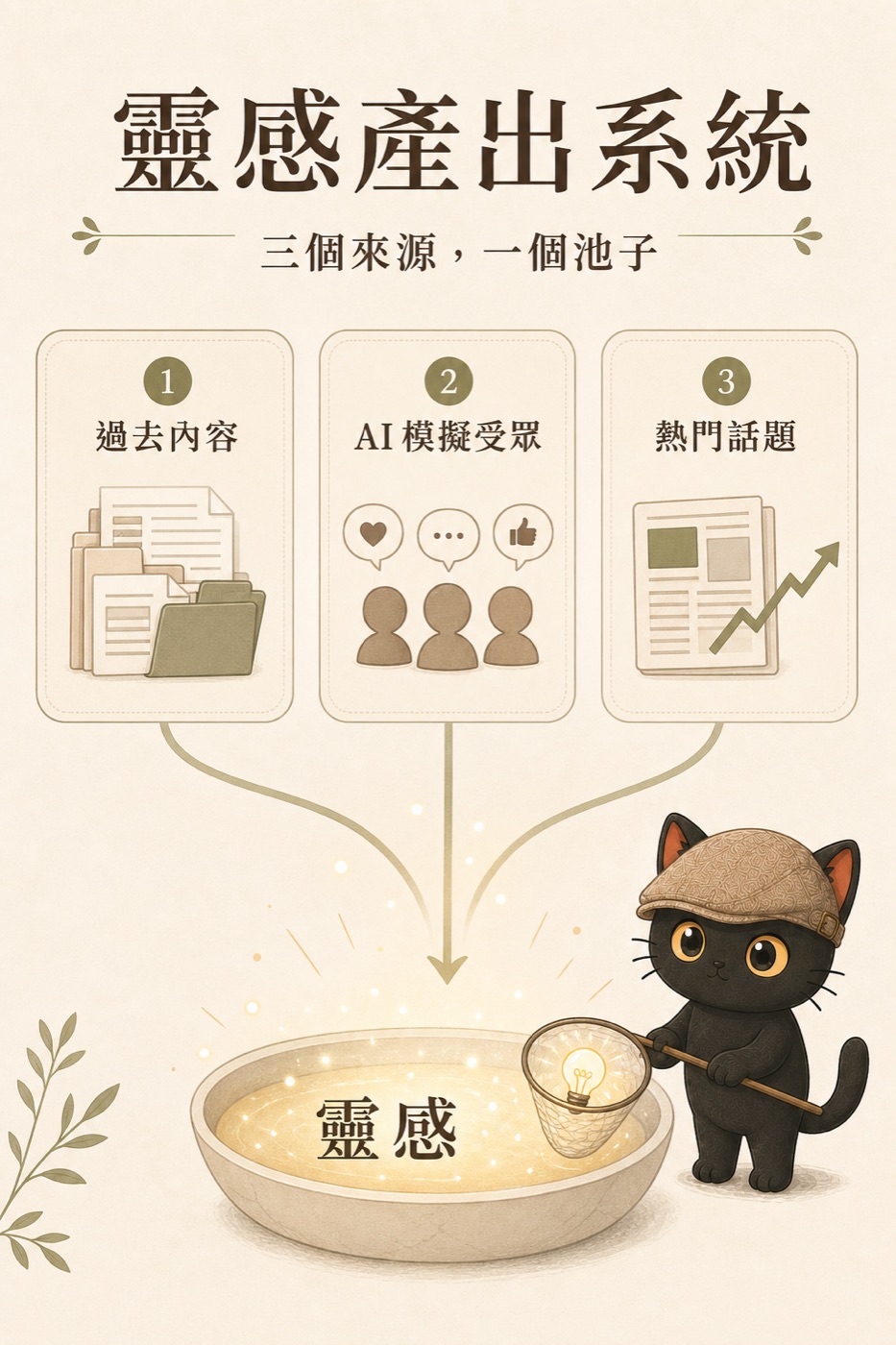
In two consecutive classes, the students all asked the same thing: I am the principal of a one-person studio and also a bell ringer, and I feel tired when I want to publish topics every day. This article breaks down my own "inspiration production system": three sources of inspiration, how to accumulate them in daily life, how to get them by placing tags, and two instructions for actual operation. The characteristics of hot-selling products are hard to come by, but stable posts with ordinary levels and personal characteristics can be produced by the system. Who is
- One-person company, self-media, people who want to run a stable community but are stuck on "what to post today" every day
- People who have a bunch of old articles, notes, and screenshots on hand, but can never find them when they need to use them.
- Knowledge workers who want AI to help publish articles, but find that the writing does not taste like their own.
- A set of "three sources of inspiration" model: past accumulated content, AI simulated audience, hot topics, how to combine them
- Three tagging techniques that can be learned from the pool, plus a tagging command that can be copied directly
- A two-sentence workflow from seeing the meme to posting, and two free skill packs
I think about "what to post today" every day, and I feel tired when I think about it.
In two consecutive classes, students asked the same thing.
One person said: I am the principal of a one-man studio and also a bell ringer. I feel tired when I want to post topics every day. Another person said: If you want to post systematically, you hope that AI can directly rewrite a week's worth of posts based on past blog posts, and in the format and tone you want.
My answer to this question is: Yes, and inspiration can be stably produced.
Let’s make our expectations clear first: the characteristics of popular products are still rare. But stable posting of ordinary-level posts with personal characteristics can be accomplished by establishing a system. I call this system "Inspiration Pool".
Three Sources of Inspiration Pools
My inspiration pool has three sources of inspiration. It's mediocre when used alone, but its power lies in combination.
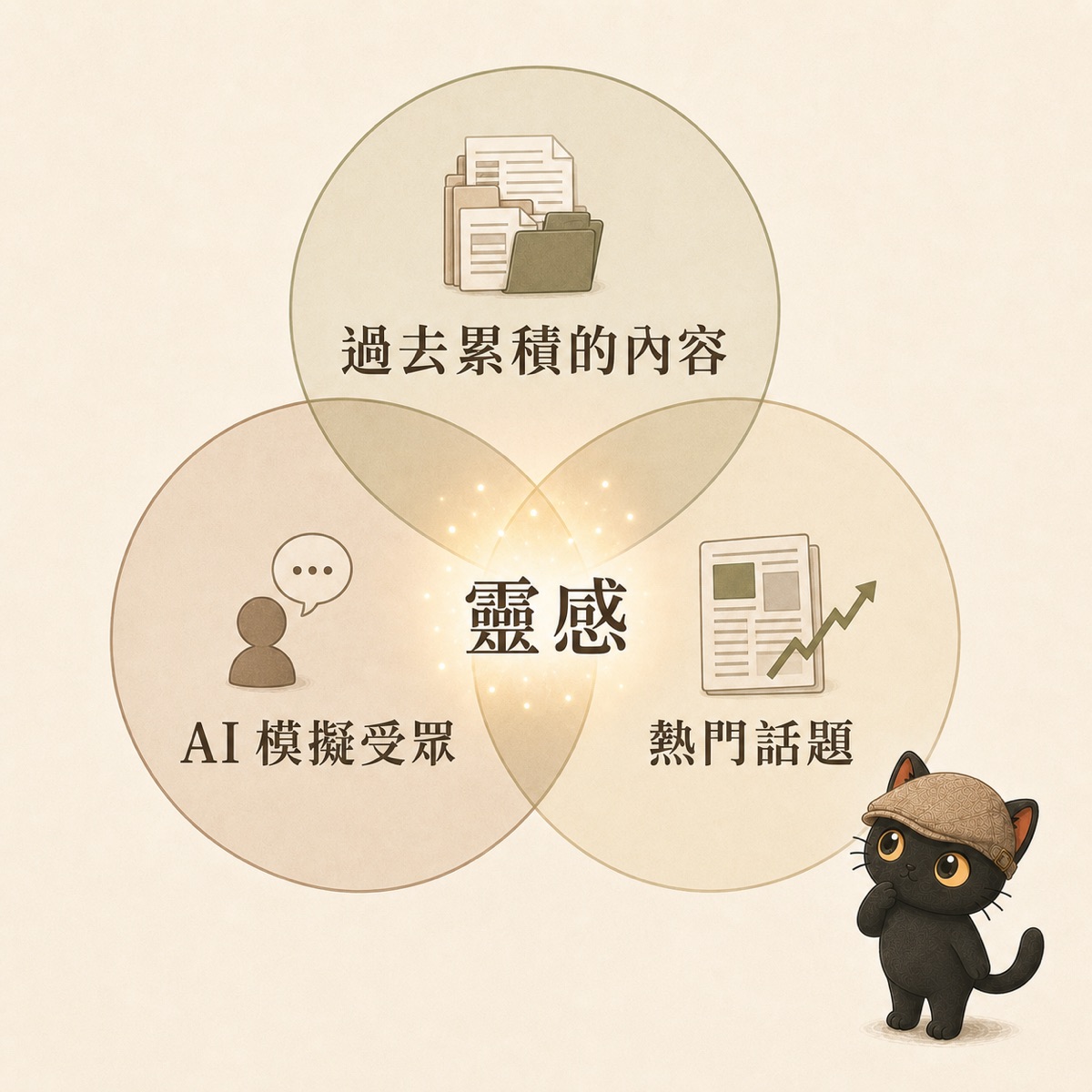
The crisp articles, in-depth articles, daily work logs, content taught in class, and questions answered by students are all materials that you have sorted out and can be reused. Every article you have written in the past can be written again from a different angle and for a different audience. The value is: you never have to start from scratch.
Ask AI to play the role of my various audiences: the boss of a one-person company, the administrator who is new to AI, and the lecturer who wants to transform, and let them talk about their respective problems. This step helped me come up with "questions worth testing" and then compare them with real messages, conversations, and questions asked by customers to decide which ones to write first. AI simulations are outposts, not stand-ins for real audiences. I used what I made myself AI Consumer Verification Skill package allows AI to generate ten audiences at a time to comment on my content.
What everyone is discussing recently and what topics have traffic. This area is responsible for "being seen". I don’t look for topics one by one by myself. I will ask AI to send several agents to check separately (one to check trends, one to check discussion popularity, and one to check what opponents are writing). Each agent will only bring back information with proven sources, and then I will pick. The complete setting of this "multi-agent query data" will be discussed separately. I will publish a tutorial later, but it is good to know this direction first. But the topic is just the entrance, not the content itself. Just chasing hot topics will not build trust. The topic must be able to connect you to your major.
The power lies in the combination:Use hot topics to pick up the points that everyone pays attention to, and then connect them back to my professional solutions.The topic is responsible for attracting people, the situation is responsible for making readers feel "this is talking about me", and the solution is responsible for turning traffic into trust. A topic can be paired with different old articles, and one old article can cater to different audiences. This is the inspiration library, which can be continuously combined.
How to accumulate this pool
The inspiration pool is not built when needed, it is accumulated bit by bit. Two habits:
The first habit: when collecting, write one more sentence
In the past, when we saw good articles, we would like them and save them. I would like to add one more sentence now: why I think it is good, what impressed me about this article, and what kind of problems and needs did I find it for.
This sentence is the "instructions for use" of this material. What's the difference? If you only collect materials, you won’t be able to remember why you saved them in the first place three months later; if you write a sentence of materials, the AI will know “what kind of data will be used in what situation” after reading it, and it can retrieve it when needed and use it in the right place.
The second habit: throw it away and let AI tag it
When you have an idea, see a good case, or a customer asks a question, you don’t need to sort it out. Just throw it to the AI and ask it to label it and return it to its place. When it’s time to post, I ask it to give me five inspirational words to write. I have accumulated a lot of small inspirations, which is an in-depth article, a live broadcast, and a sharing session.
The tag is the harvesting system for the inspiration pool
After the pool is raised, what really determines whether it is useful or not is the label. It is easy to throw the material in, but whether it can be fished out after three months depends on whether the label is well placed. Three tips:
Tip 1: Add at least three tags to one piece of material, one for each category
Align the three categories of Tip 3 below: one for theme, one for audience, and one for situation. You need to add one or two more. As soon as the tag is hung, the scattered materials will grow into a series of theme lines. When you want to write about a certain theme, pull out the whole series to become a material package.
Tip 2: Use fixed words for labels, don’t use synonyms randomly
This is the trap that most people fall into. Save "AI applications" today, "artificial intelligence applications" tomorrow, and "AI tools" the day after tomorrow. The same topic is split into three tags, and the pool is no longer profitable. The method is very simple: open a "My Tag List" and stipulate that each concept uses only one fixed word. Ask the AI to read this list first when placing tags. If the words are not in the list, you will be asked first before adding them. This is the vernacular version of controlled vocabulary and my entire set of Tag link method Tag Wiki The starting point of .
Tip 3: Labels are divided into three categories to gain dimension when fishing.
My own habit is at least three categories: theme (what is this article talking about, such as "inspiration pool" and "skill package"), audience (who is this article written for, such as "one-person company" and "lecturer"), and situation (when will it be used, such as "opening story", "counterexample" and "data support"). If all three categories are available, you can issue a compound command: "Help me find the subject of the "Skill Pack", write it to the "One-Man Company", and use it as material for the "Opening Story"", and the pool will instantly become a database that can be queried.
In class, I gave an instruction that can be copied directly (paste your tag list together, and the AI will follow the fixed words):
Practical operation: from seeing the meme to sending it out
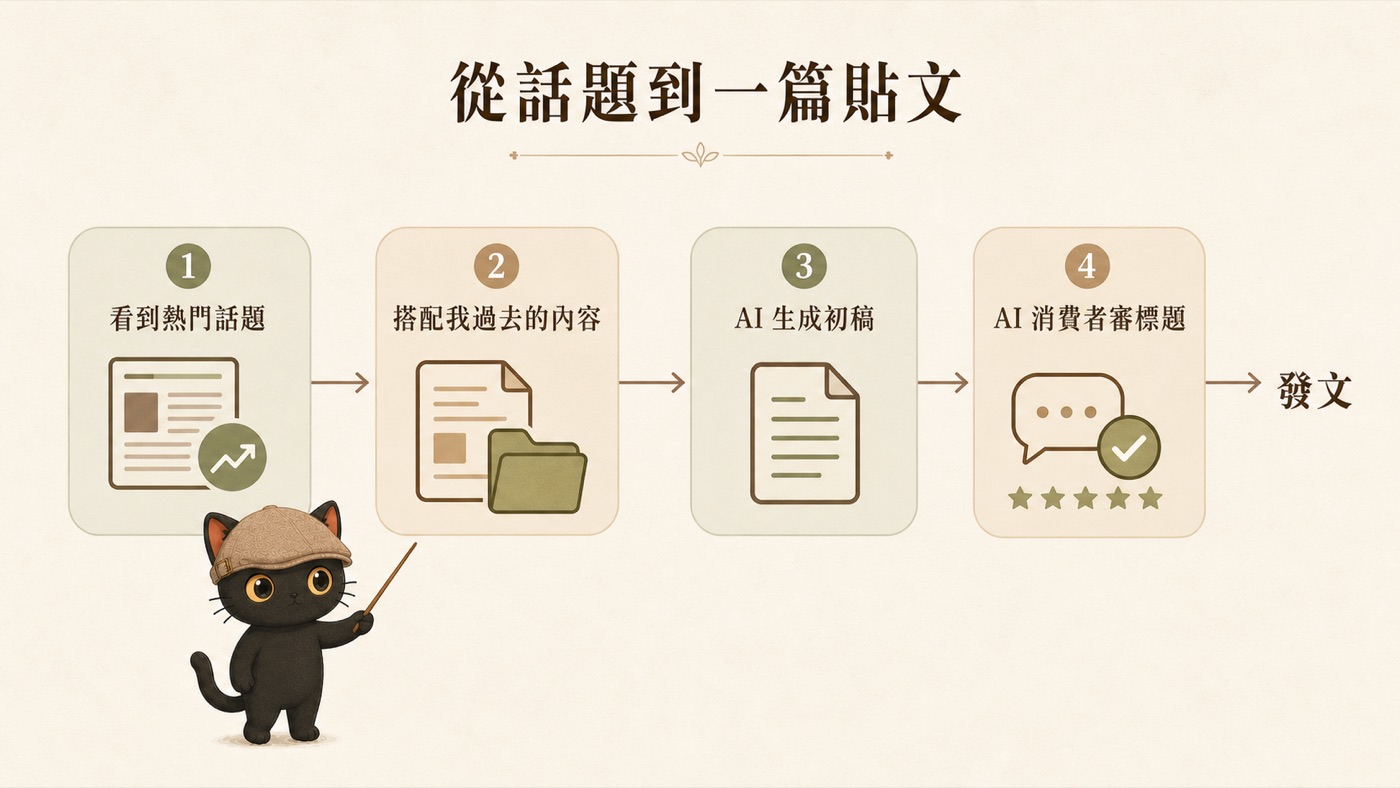
There is a premise before doing this step: first put past articles, logs, and student questions and answers into a place where AI can find it (a folder, a note library, or an AI project will do), then it will have something to harvest. The place is ready, all that's left is two sentences.
I saw a popular meme and thought I had some ideas, so I threw the meme to the AI:
It will pull out the right old articles from my database (this step is accurate only if you tag them well), and combine them with the memes to write a new article. I will say this after I finish writing:
Two sentences, one post. The memes are new, the content is what I have accumulated, and the titles are understandable to the audience. The three areas are in their place in this process: the third area is for memes, the first area is for content, and the second area is for title control.
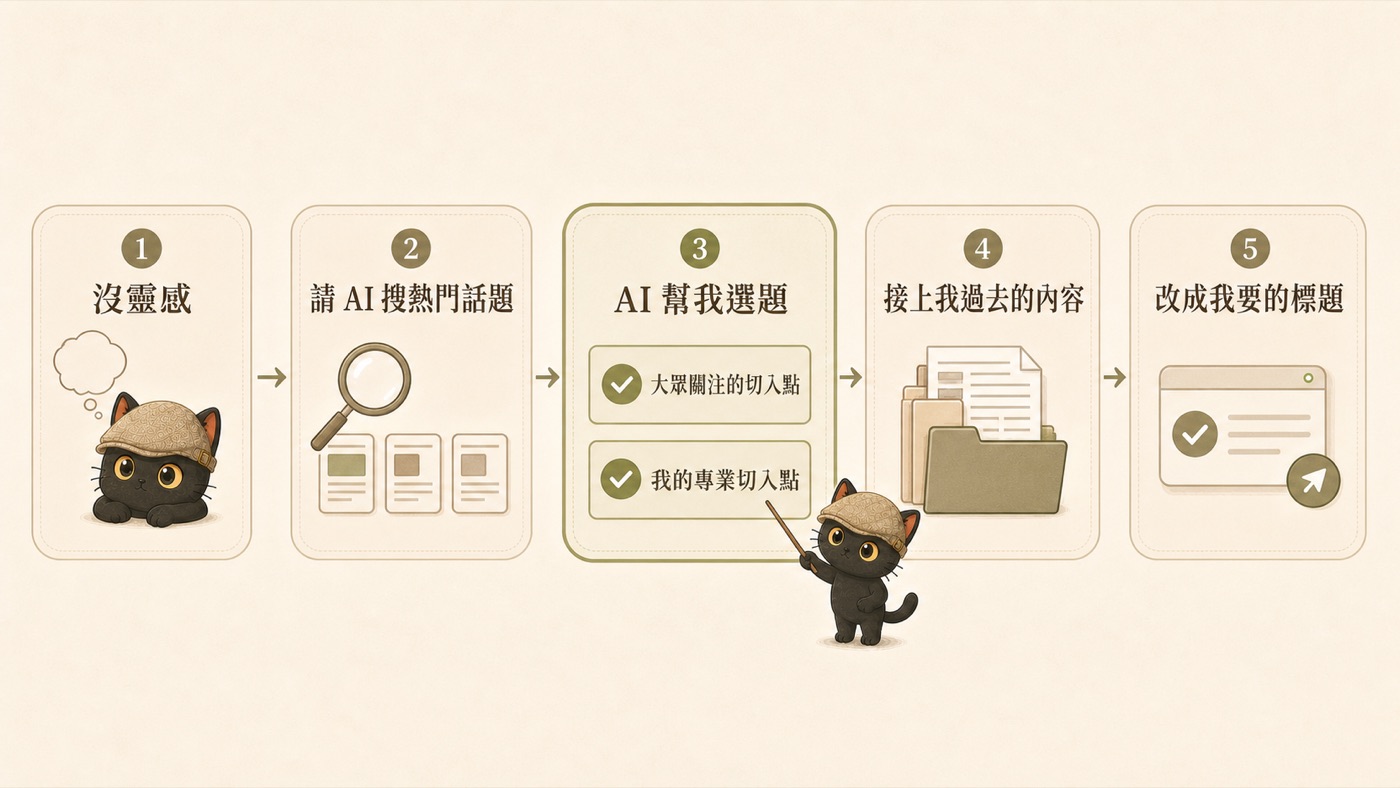
On days when I have no inspiration, I choose a topic like this
On days when I really have no inspiration, I don’t just think about it and just ask AI to help me search for hot topics. After searching it out, I asked it two questions: Which of these topics are the entry points that everyone is paying attention to? What can I do professionally? Please help me choose a topic. I choose a topic, connect it to my past content, and finally use the opening formula to put together several titles, score them from the audience’s perspective, and change them to the title I want.
AI Consumer Verification: Let AI simulate your various audiences and evaluate your articles, titles, and product copywriting.
Change title title-rewriter: Change one content to multiple opening versions, and each title is accompanied by a green light, yellow light, and red light risk assessment, without sensationalism.
The combination of the two packages is equivalent to asking AI to generate ten audiences to ask questions, and then change the title according to their language.
→ Go to the skill pack download pageFrequency Philosophy: Continuity is more important than online beauty
Finally, let’s talk about the mental method. When it comes to social media posts, I think continuity is more important than online beauty.
I have also thought about making a video, but with my current time allocation, the effort of making a short video is enough for me to write five to ten short articles. The production cost of a short article is low, so I first choose to use short articles to maintain the rhythm. This is my choice, not that short videos are bad.
Instead of spending a month to shoot a video very seriously and then getting tired and not wanting to shoot the next month, it is better to have a stable frequency: I currently shoot one to two on weekdays and three to five on holidays. If you have posted on weekdays and have potential, post again on weekends with a different beginning.